What to do
 01
01Keep your distance
Do not approach the nest, knock it, throw things at it or spray water at it. The further away you stay, the calmer the wasps will be.
 02
02Keep children and pets clear
Make sure the area around the nest is out of bounds, especially if the nest is near a door, window, patio, garden or children's play area.
 03
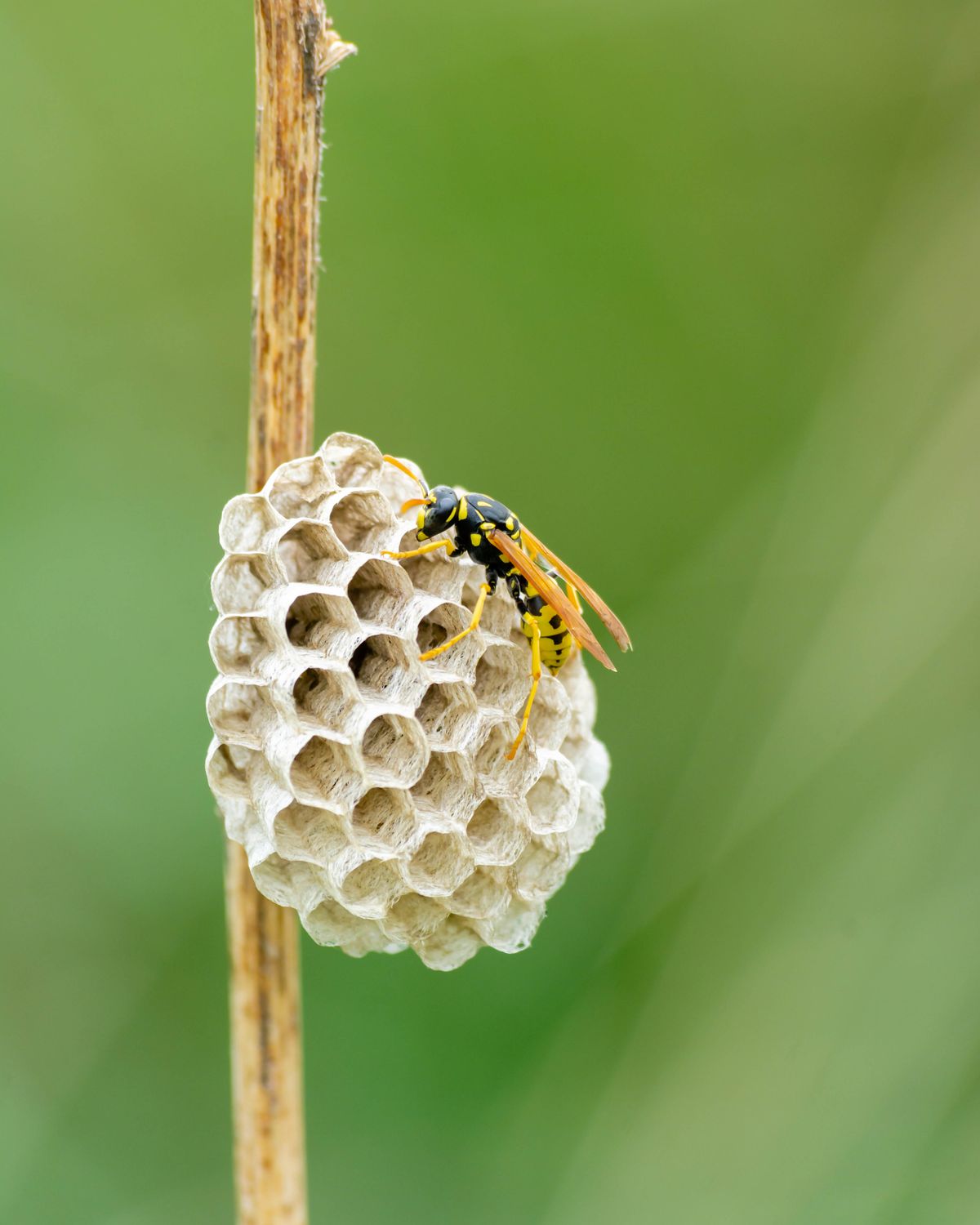
03Watch the nest from a safe distance
Note where the wasps are entering and leaving, and roughly how active they are. This tells a professional where the nest is and how established it is.
 04
04Call a professional
Describe the location and activity. If the nest is in a risky spot, or someone in the household has a sting allergy, make that clear when you call.
What not to do
Do not block the entrance. Sealing a nest entrance makes wasps find alternative routes, which can push them inside the building. It also makes the nest far harder to treat.
Do not use DIY sprays or powders. Shop-bought wasp products rarely work on established nests, and they can make the wasps more aggressive. A disturbed, partially treated nest is the most dangerous kind.
Do not climb ladders or reach into lofts. Nests in loft spaces, eaves and roof voids are not a DIY job. Falling while dealing with angry wasps is a real risk.
Do not set fire to a nest. It sounds extreme, but it happens. Burning a nest in a loft, shed or tree puts the whole property at risk.
Where do wasps build nests?
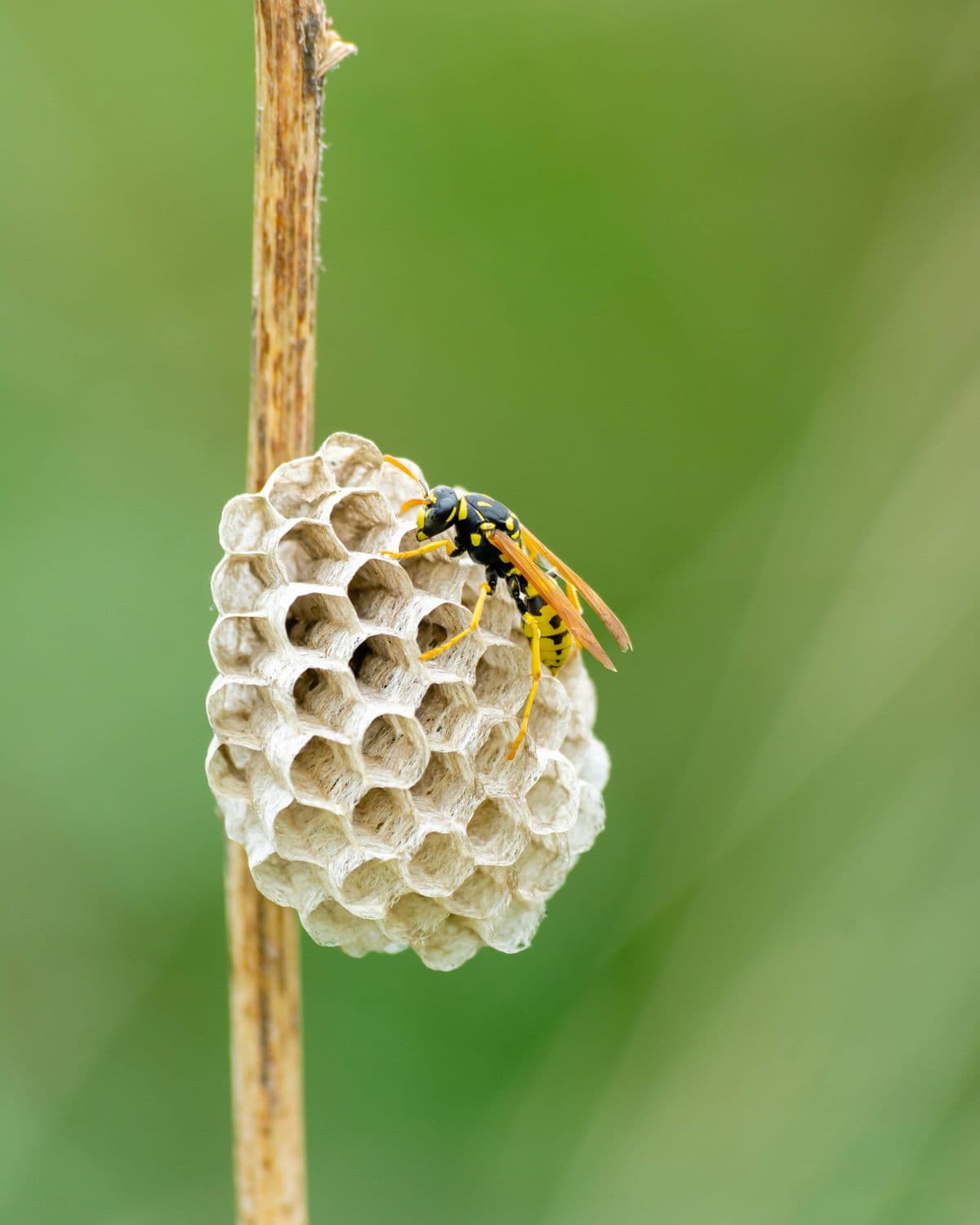
Nests can appear in any number of spots, including:
- Lofts and roof spaces
- Wall cavities
- Eaves, fascias and soffits
- Garages, sheds and outbuildings
- Trees, hedges and shrubs
- Ground-level areas and garden buildings
- Commercial buildings
A nest in a loft can go unnoticed for weeks. You may only realise it is there when wasps start finding their way into the rooms below, through light fittings, vents or gaps in the ceiling.
When to call a professional
Call a professional if:
- The nest is close to a door, window, patio, garden or play area
- The nest is inside the property, in a loft, wall cavity or roof space
- Someone in the household is allergic to wasp stings
- The nest is large or the wasps are aggressive
- You run a business, holiday let or guest accommodation where customers or guests could be affected
We cover Bude, Launceston, Holsworthy and the surrounding area, with free quotes and no hidden charges. Call 07552372561 or request a quote.
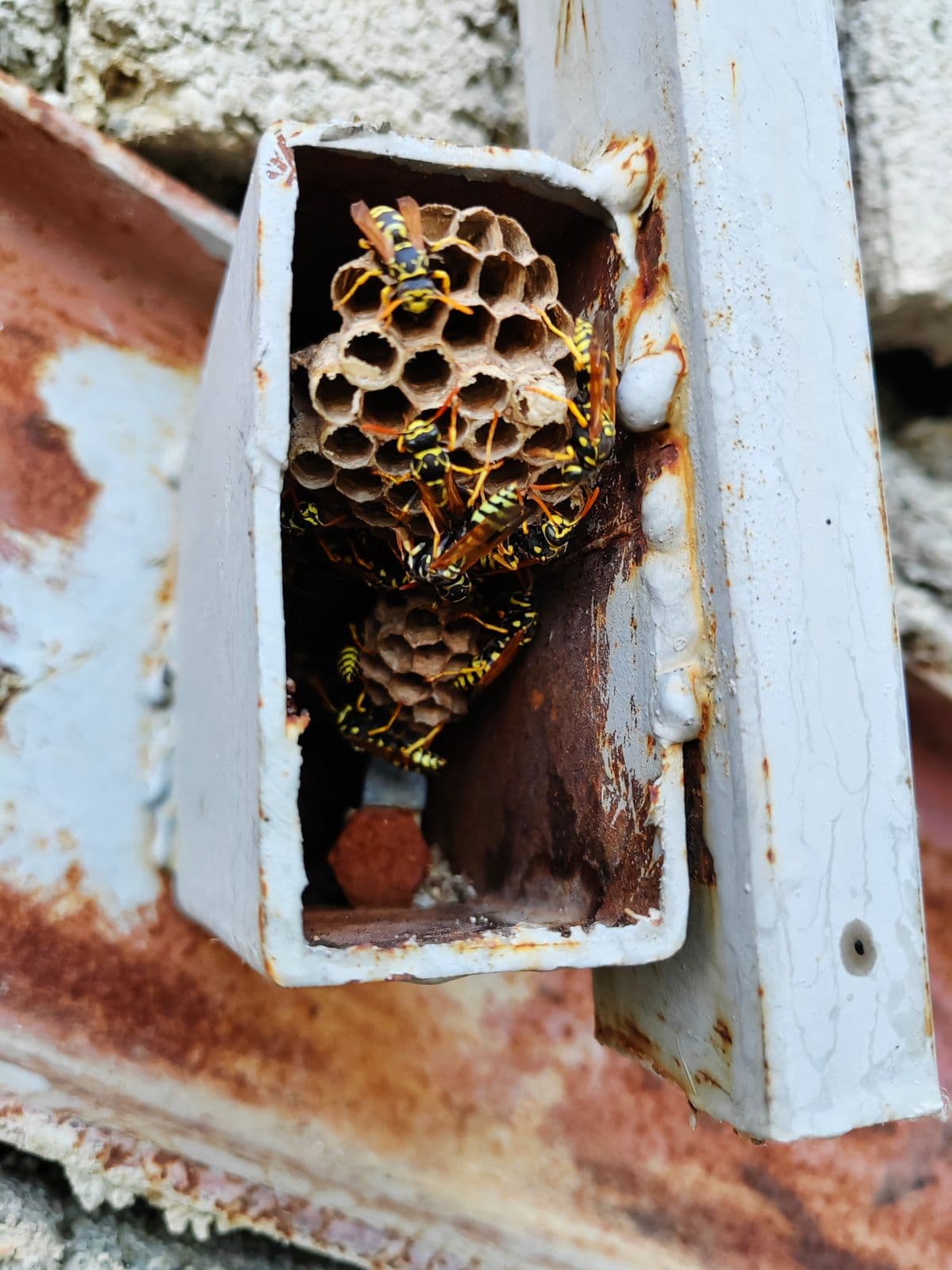
How is a wasp nest removal quote worked out?
Do I need the nest removed?
Preventing wasp nests
Common questions
Should I block the entrance to a wasp nest?+
No. Blocking the entrance makes wasps find alternative routes, which can push them inside the building. It also makes the nest harder to treat.
Can I remove a wasp nest myself?+
No. DIY removal is dangerous. Disturb a nest and the wasps will not hold back: one wasp can sting again and again. Professional treatment is the safe option.
Do wasps return to an old nest?+
Nests are single-season structures, and a new colony will not move back into last year's nest. Wasps can, however, build afresh nearby, so it is worth keeping an eye on the same spot each spring.
What if I find a wasp nest in my loft?+
Keep the loft hatch closed and call a professional. Nests in lofts and roof spaces are common and are treated safely, usually in a single visit.
How much does wasp nest removal cost?+
What you pay depends on where the nest is and how easy it is to reach. You get a clear quote before any work starts, with no hidden charges.
How quickly can you treat a wasp nest?+
We get to nests promptly where our diary allows. If the nest is in a risky spot or causing an immediate problem, make that clear when you call and we will prioritise it. ---
Jack is the owner of SW Pest Management, a local pest control business based in North Cornwall covering Bude, Launceston, Holsworthy and the surrounding area.
More about SW Pest Management →Found the signs of a pest problem?
Call 07552 372561 for honest advice on what you are dealing with, or request a quote for a free, fixed-price visit.